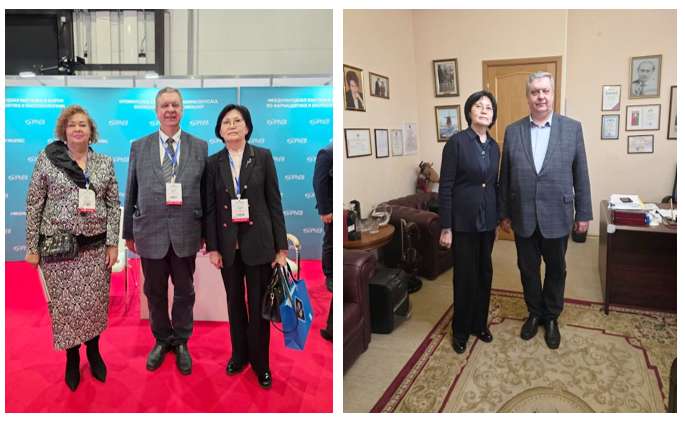
Expanding the horizons of international cooperation
From April 6 to April 10, 2026, an academic mobility program was carried out by the Head of the Department of Pharmaceutical and Toxicological Chemistry, Professor S.K. Ordabayeva, at the Department of Pharmaceutical Chemistry of Saint Petersburg State Chemical and Pharmaceutical University (SPCPU).
The academic mobility program included lectures, laboratory classes, and seminars delivered to 3rd–5th year students of the “Pharmacy” educational program. The sessions covered the disciplines “Pharmaceutical Chemistry” and “Standardization of Medicines” and addressed the analysis of medicinal products, including heterocyclic compounds, steroid hormones, antibiotics, requirements of the State Pharmacopoeia of the Republic of Kazakhstan and EAEU regulatory documents for the quality, safety and effectiveness of medicines and others.
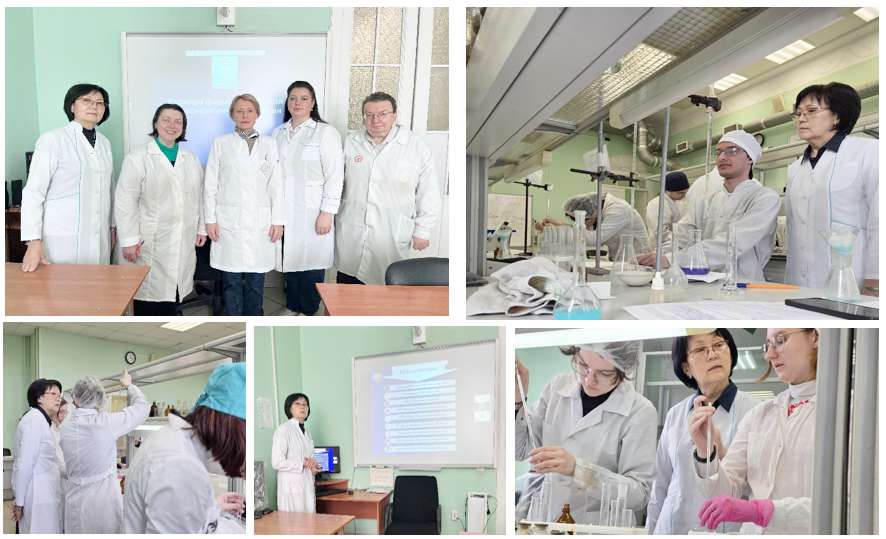
Professor Ordabayeva shared her experience in educational and research activities with the academic staff of the host institution. Discussions focused on the organization of the educational process within a credit-based system, the development and implementation of joint educational programs with partner universities, the integration of information technologies and artificial intelligence into curricula, the use of active learning methods, and the key research areas of the department.
Professor S.K. Ordabayeva also actively participated in the V All-Russian Scientific and Practical Conference with international participation, “Pharmaceutical Science: Challenges and Solutions in the 21st Century,” held within the framework of the IPhEB 2026 Pharmaceutical and Biotechnology Business Forum.
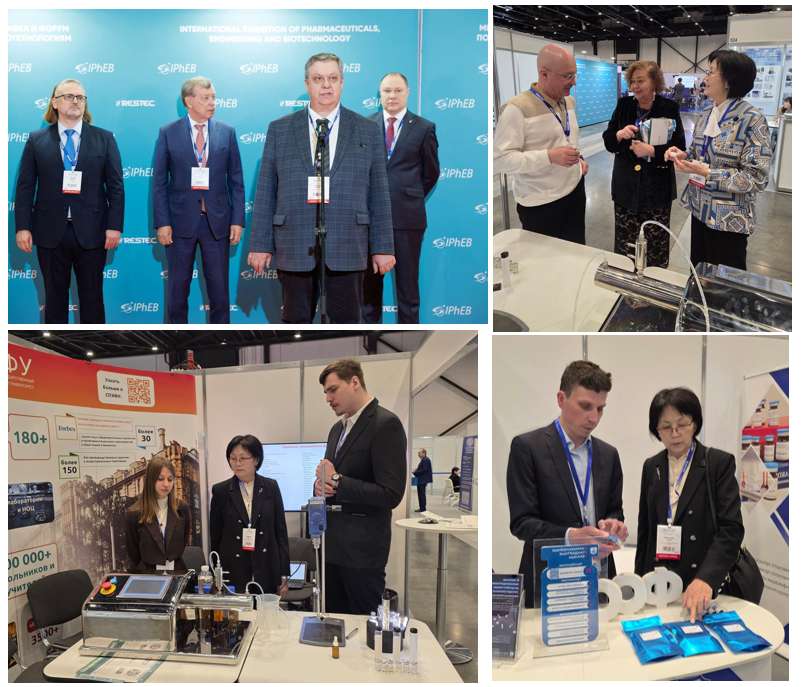
IPhEB 2026 is a major industry event that annually brings together hundreds of experts from the pharmaceutical sector across Russia and other countries. The conference featured sessions on preclinical research, drug development and manufacturing, перспективные направления биотехнологий, pharmaceutical education, pharmaceutical microbiology, small-scale chemistry, and other relevant topics.
As part of the forum, the First All-Russian Scientific and Practical Conference with international participation, “Pharmaceutical Chemistry: Practical Implementation of Applied Science,” was also held. This educational track addressed issues related to bioanalytical research, quality control and standardization of medicines, research methodology and analytical instrumentation, wartime pharmacy, and other areas.
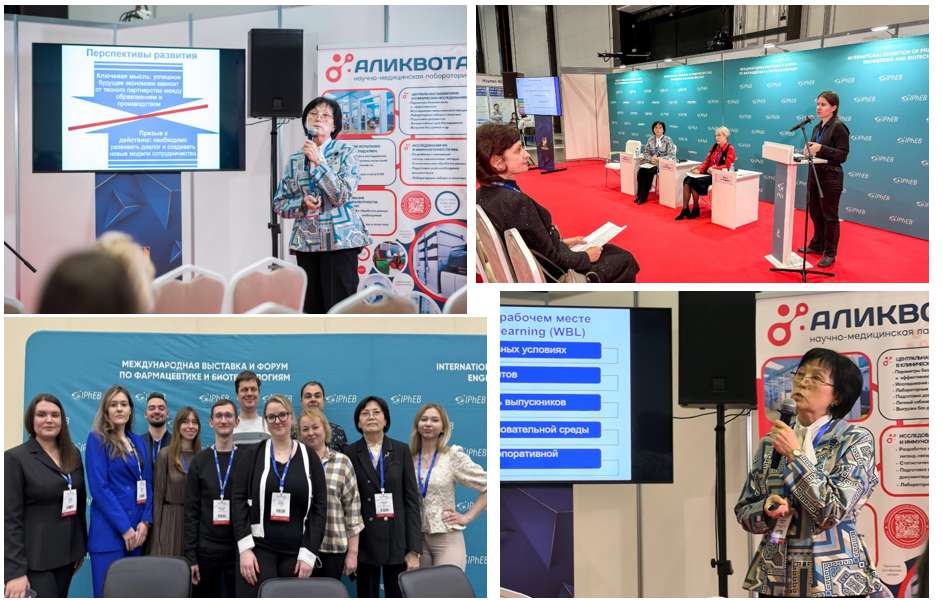
The Kazakhstani experience in integrating academia and industry was presented by Professor S.K. Ordabayeva. At SKMA, a dual education model has been successfully implemented, where the connection between education and industry is ensured through work-based learning, exemplified by collaboration with major manufacturers such as Santo (a member of Polpharma Group) and BioEtica LLP. This approach demonstrates how competencies in pharmaceutical quality control are developed directly in real workplace settings. Such integration reduces the transition period for young professionals entering the workforce and ensures that graduates are fully prepared to operate modern high-tech equipment immediately after graduation.
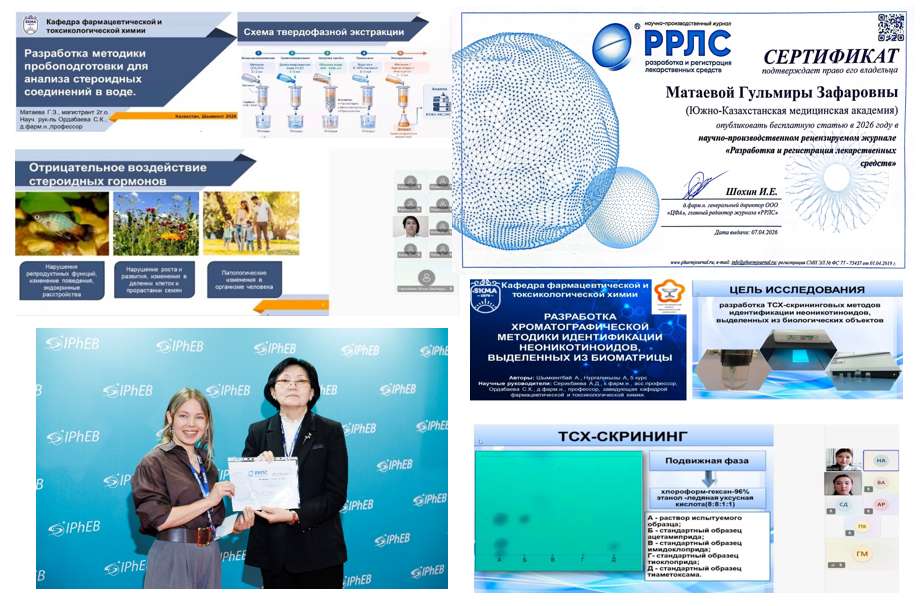
On April 6, 2026, SPCPU hosted the Conference of Young Scientists and Students, “Young Pharmacy – The Potential of the Future 2026.” Young researchers presented their work in areas such as drug development and technology, bioanalytics, quality control and standardization of medicines, pharmacognosy and phytochemistry, preclinical research, and others. At this stage, members of the student scientific club of the department, A. Shymkentbay and A. Nurgalikyzy, participated online with a presentation entitled “Development of a TLC Screening Methodology for Neonicotinoid Pesticides Isolated from Biological Fluids.”
A second-year master’s student, G. Matayeva, who presented her research on the quality of water bodies in Shymkent with respect to steroid compound content, received a special prize—an opportunity for free publication in a Scopus-indexed journal. The award ceremony took place at the IPhEB 2026 venue.
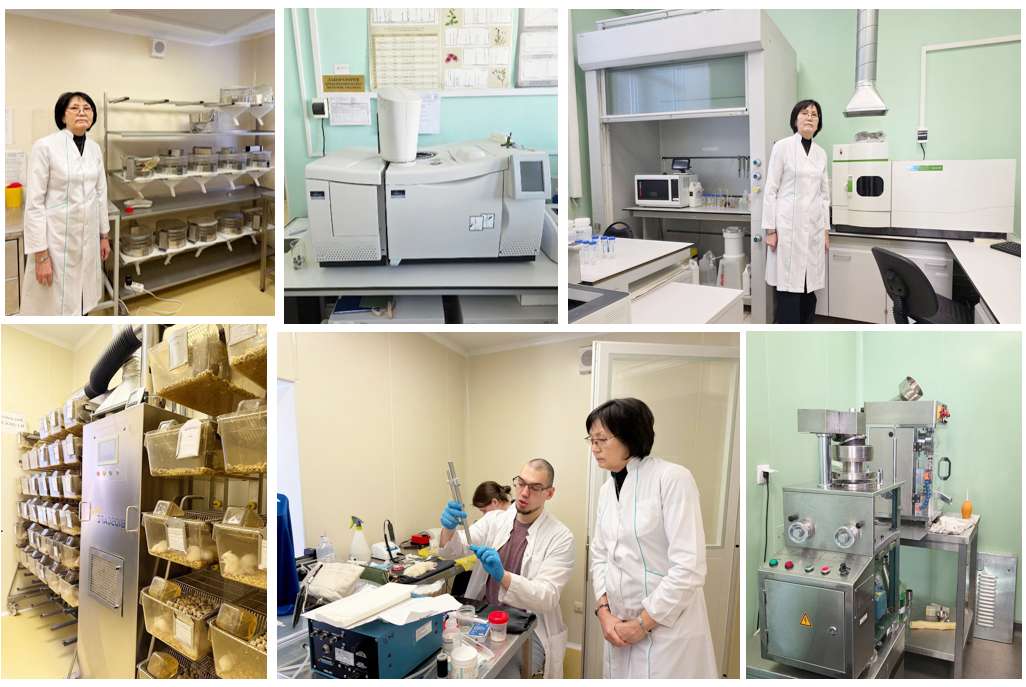
The intensive academic mobility program also included visits to key innovation centers of the University, such as the Center for Experimental Pharmacology, the Center for Quality Control of Medicines, the Shared Research Facilities Center, and the GMP Training Center.
As part of the closing activities, Professor S.K. Ordabayeva met with the Rector of SPCPU, Professor I.A. Narkevich, who expressed gratitude to the Academy’s leadership and faculty for their productive cooperation. During meetings with the Vice-Rector for Research, Professor E.V. Flisyuk, and the Head of the Department of Pharmaceutical Chemistry, Professor O.Yu. Strelova, перспективные направления дальнейшего сотрудничества, including joint educational programs and research initiatives, were discussed.