Development of research and professional competencies of students on the workplace
During the Third Forum of Young Scientists and Students and the XII International Conference of Young Scientists and Students "Prospects for the Development of Biology, Medicine, and Pharmaceutics," a breakout session was held dedicated to the results of collaboration between the Department of Pharmaceutical and Toxicological Chemistry and the pharmaceutical industry. The topic of the session, "Developing Research and Professional Competencies in Students in the Workplace," reflected the current challenges of modern pharmaceutical education and its close connection with the practical training of specialists.
Students and academic supervisors from the Department of Pharmaceutical and Toxicological Chemistry participated in the session. The results of practical work at various internship sites, covering a wide range of areas, were presented, ranging from the results of internships in drug quality control and chemical-toxicological analysis to the organization of dual training programs at pharmaceutical companies.
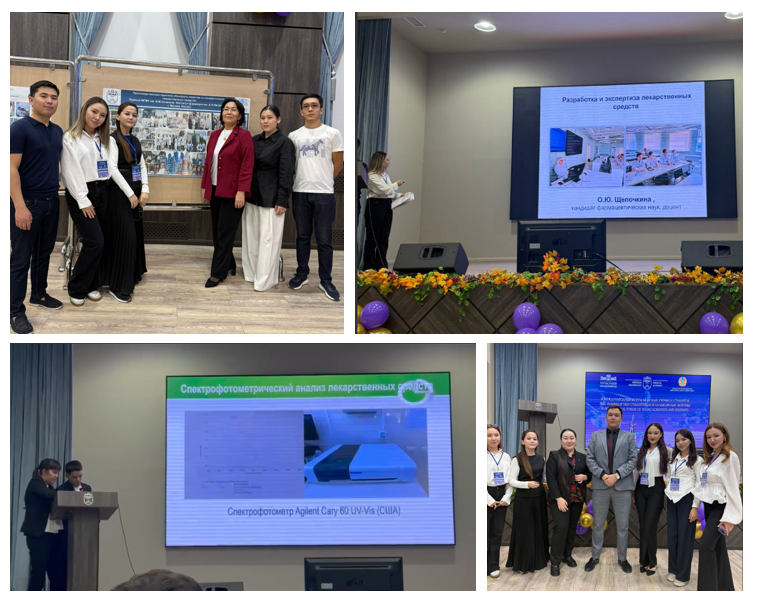
The participants' presentations demonstrated the students' high level of preparation, their commitment to research, and their commitment to professional development. Of particular interest were the presentations on the application of modern methods of chemical, toxicological, and pharmaceutical analysis, as well as the students' experiences during internships at various specialized facilities.
In the area of toxicological chemistry, students completed internships at the Shymkent Center for Forensic Medicine and the Shymkent Mental Health Center, where they were introduced to forensic chemical analysis and toxicological analysis methods.
Internships in pharmaceutical chemistry were organized in leading educational and expert institutions, including:
1. Branch of the National Center for Expertise of Medicines and Medical Devices (Taraz);
2. BioEtica LLC Testing Center (Shymkent);
3. I.K. Akhunbaev Kyrgyz State Medical Academy (Bishkek);
4. I.M. Sechenov First Moscow State Medical University (Moscow).
Students noted the importance of the experience gained and the opportunity to work in real production conditions with modern analytical equipment.
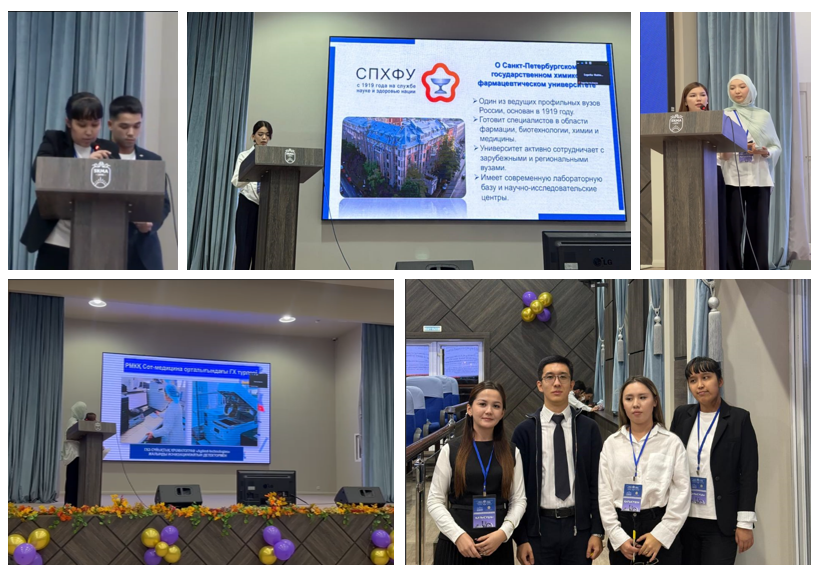
Rano Usmanova's report on the results of academic mobility at the St. Petersburg State Chemical and Pharmaceutical University was of particular interest. She highlighted the learning conditions and teaching methods for specialized disciplines, as well as the practical training in quality control and standardization of medicines.
It was noted that practical training not only helps reinforce theoretical knowledge but also develops research skills, analytical skills, and responsibility for the quality of procedures performed in future pharmacists. Furthermore, the prospects for introducing and developing a dual education system aimed at integrating educational processes with industrial and scientific activities were discussed.
The meeting's results confirmed that practical training is an integral element of students' professional development and serves as a crucial link in implementing a competency-based approach to education. Such events facilitate the exchange of experience, strengthen interactions between the university and practical training sites, and improve the quality of training for pharmaceutical specialists.