Report on the Scientific and Methodological Activities of Assoc. Prof. ÖREN ÇELİK, Meryem Merve Under the “Visiting Professor” Programme
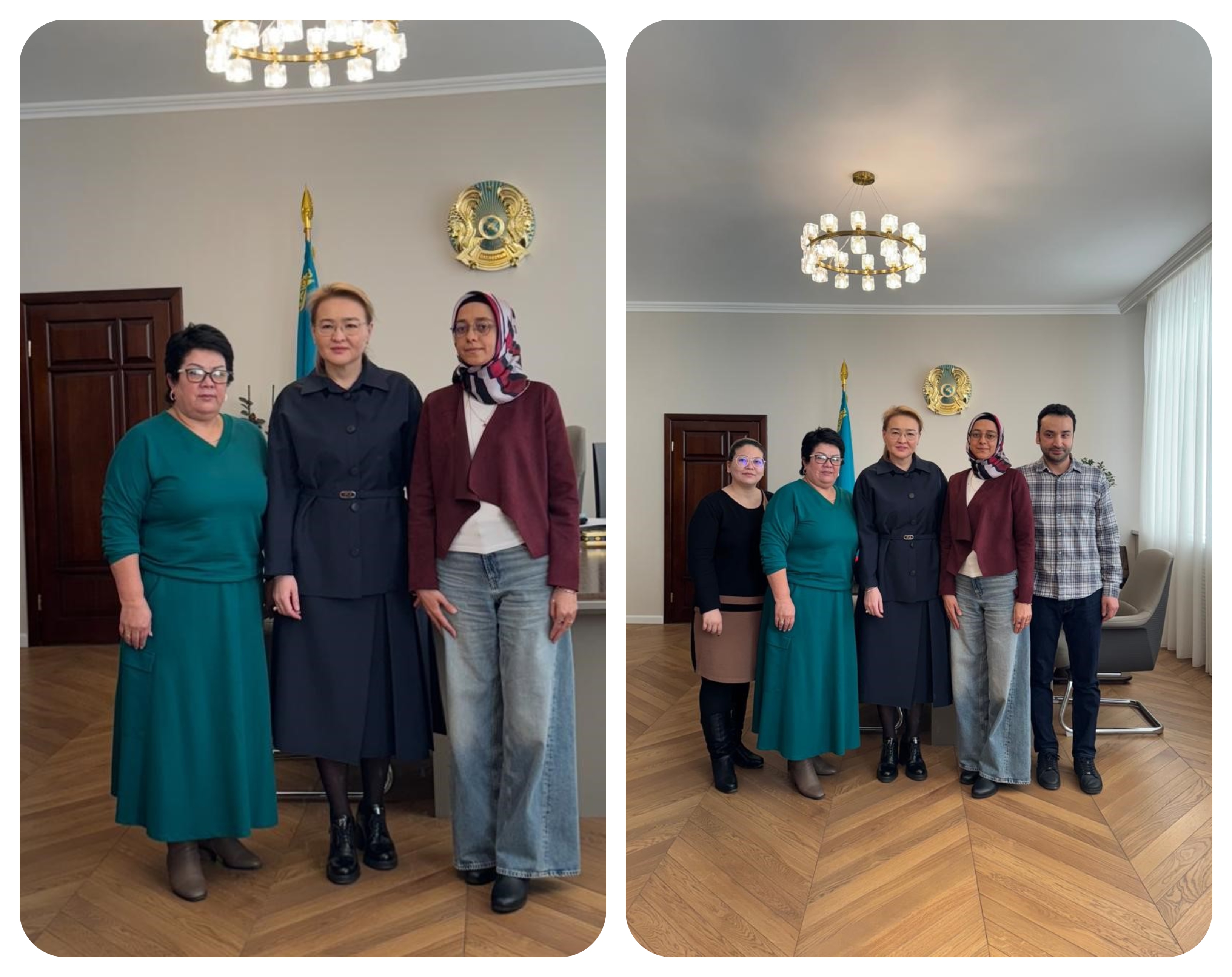
From 1 to 12 December 2025, the Department of Public Health and Healthcare at JSC South Kazakhstan Medical Academy hosted an intensive academic visit by Assoc. Prof. ÖREN ÇELİK, Meryem Merve, MD, MSc — Associate Professor, Department of Public Health, Istanbul Faculty of Medicine, Istanbul University (Türkiye). The entire programme was delivered in the department’s small conference hall.
Focus was placed on the three doctoral candidates under her international supervision:
— Magay, Lyubov (medical and social care for elderly populations),
— Kudyarova, Saltanat (ealth of adolescents aged 15–17)
— Mussayeva, Arina (factors contributing to aggressive behaviour in adolescents).
With them, Prof. ÖREN ÇELİK conducted a series of in-depth individual consultations, during which the following was accomplished:
Joint development and refinement of research instruments:
— Structuring of questionnaires (demographic section + thematic modules),
— Selection, review, and adaptation of validated scales, including:
✓ WHOQOL-BREF — for assessing quality of life,
✓ Buss–Perry Aggression Questionnaire — for measuring aggression levels,
✓ ADL/IADL — for evaluating functional independence in elderly populations,
✓ Scales on social support and subjective well-being — tailored for adolescent cohorts;
— Discussion of pilot testing procedures and cultural adaptation of instruments.
Establishment of a sustainable remote supervision framework:
— A dedicated Google Drive folder was created for each doctoral candidate, organised uniformly into subfolders: Data, Drafts, Feedback, Literature, Plans;
— Monthly online meetings (45–60 minutes each) were scheduled, with the following agreed structure:
✓ Brief report on completed tasks,
✓ Discussion of current challenges and methodological questions,
✓ Assignment of new tasks with explicit deadlines;
— It was agreed to record each meeting (with participants’ consent) and document outcomes in a shared file, where the following are systematically tracked:
✓ Completed items,
✓ Tasks requiring revision,
✓ New assignments with target dates.
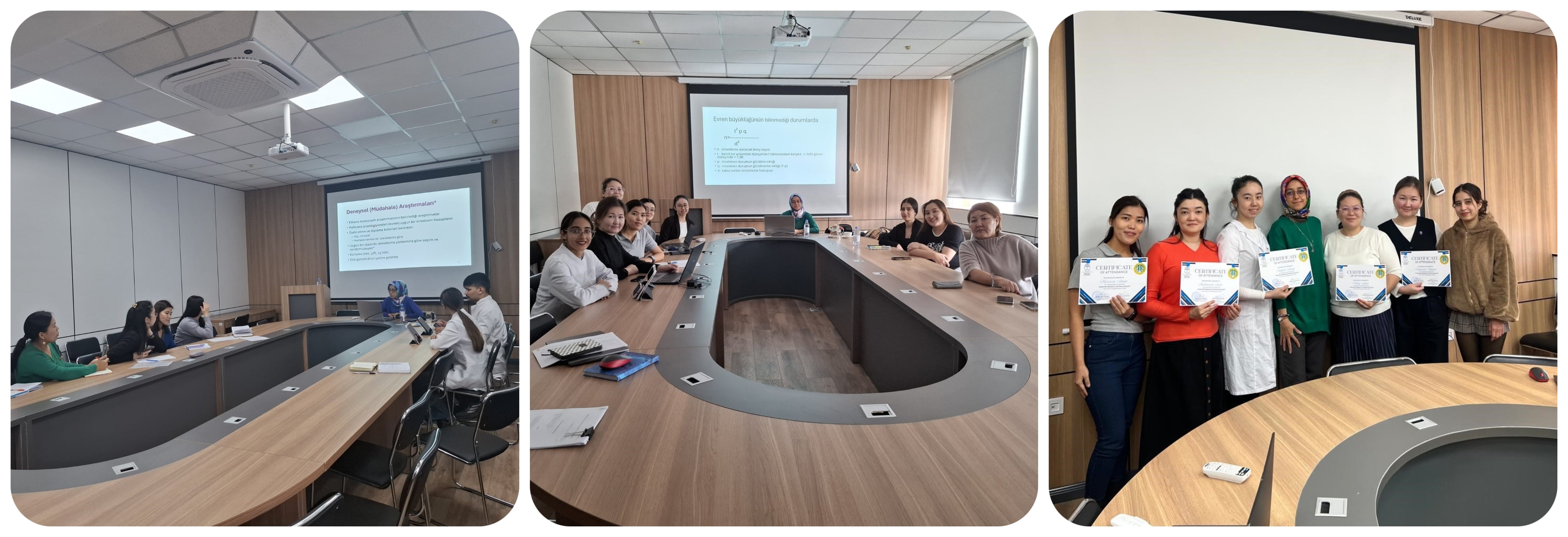
The highlight of the visit was the intensive seminar “Scientific Research and Data Analysis”, held in the department’s small conference hall. During this session, participants:
Examined approaches to the critical appraisal of research designs (cohort, case–control, cross-sectional, etc.),
Practised methods for collecting, coding, and analysing quantitative and qualitative data,
Conducted a comparative analysis of real-world public health cases from Turkey and Kazakhstan,
Gained hands-on experience in interpreting statistical outputs and constructing tables/graphs.
In addition, Prof. ÖREN ÇELİK delivered the following activities (all held in the department’s conference facilities):
— An introductory session with doctoral candidates for brief presentation of dissertation topics,
— Extended presentations by doctoral candidates, with deep methodological discussion,
— A “round-table” session where updated research plans were presented and peer-reviewed,
— A working group meeting to launch a joint international publication, involving the three doctoral candidates and faculty members,
— A final, expanded seminar for faculty, master’s students, and doctoral candidates, outlining achievements and future collaboration prospects,
— Closing individual meetings to finalise action plans and agree on post-visit online support.
In recognition of her substantial contribution, Head of the Department, Dr Gulzat Sarsenbayeva (Candidate of Medical Sciences, Associate Professor) presented Prof. ÖREN ÇELİK with an official letter of appreciation signed by the Rector of SKMA.
This visit has laid the foundation for a long-term, structured academic partnership, ensuring doctoral candidates receive high-level methodological and scientific support throughout all stages of dissertation development.